ServicesPaint and Refinishing
Paint and Refinishing in Orange Cove
We refinish single panels, bumpers and full sides of a car so the new paint matches what is already there. You get a straight answer on what failed, whether the panel needs paint or just correction, and what drives the cost before we start.
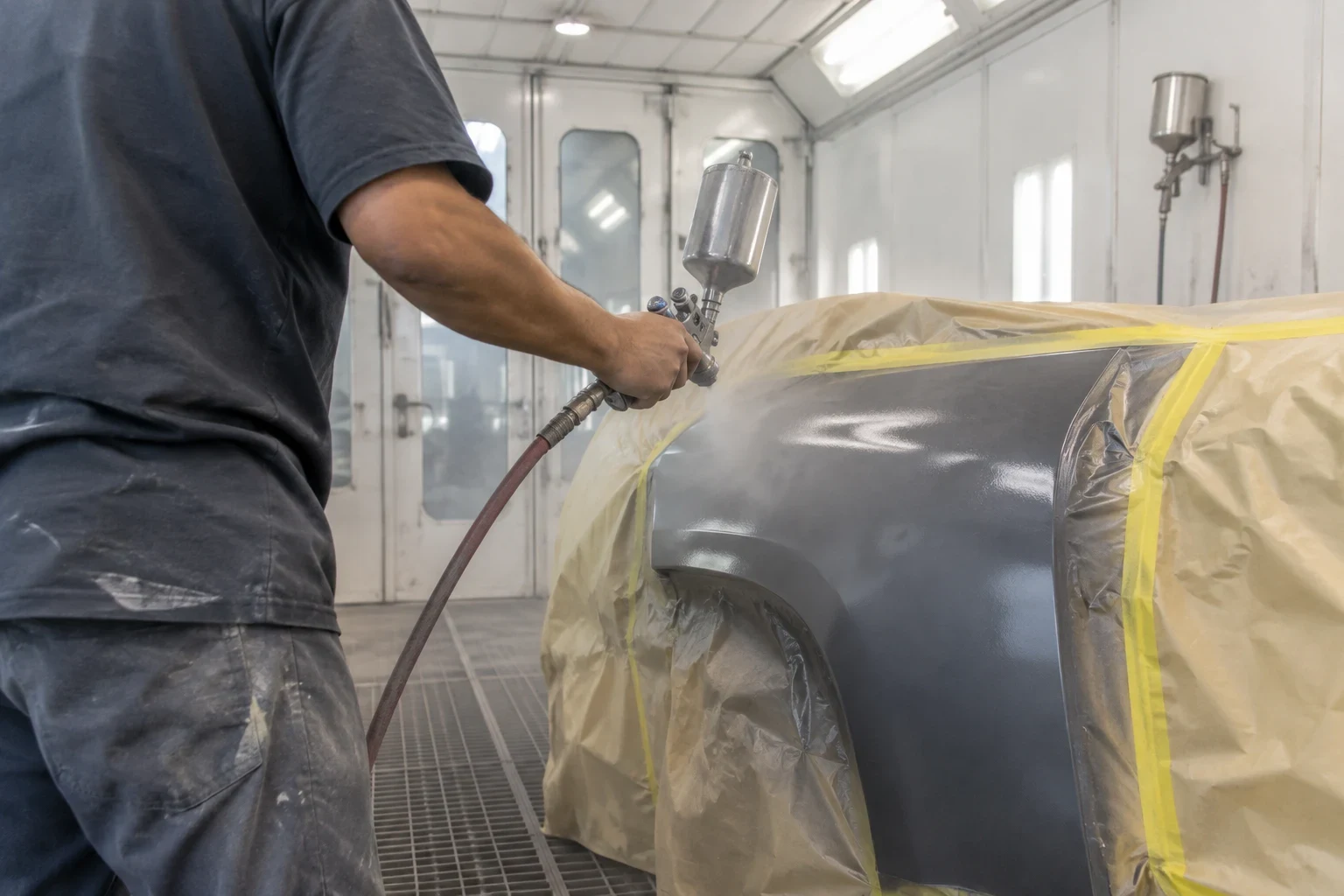
When paint and refinishing is the right call
The finish on your car is built in layers. Primer bonds to the panel, the basecoat carries the color, and a clear top layer gives the shine and blocks the sun. When that clear layer wears through, or a scrape reaches the primer, no amount of washing or waxing will restore it. The panel needs to be prepped and coated again.
Not every flaw calls for paint. Light swirls, water spots and shallow scratches that sit only in the clear can often be wet sanded and polished away. We inspect first and tell you which category your car falls into. When paint is the answer, we match the color, blend it where it helps and finish it so the repaired area looks like the rest of the car in daylight.
We are I-CAR Platinum certified, and that training matters most in the steps you never see: how the surface is prepared, how each layer is built up and how much cure time it gets.
What the work includes
Color identification
We read the paint code from your vehicle, then spray test cards and hold them against the car. Two cars with the same code can differ slightly with age, so the card decides, not the label.
Surface preparation
Old clear that is lifting gets sanded off. Chips and scratches are feathered smooth, and bare metal is primed and sealed so the new coats bond properly.
Basecoat and clearcoat in the booth
Color and clear are sprayed in a closed booth to keep dust and insects out of the finish. Each layer goes on at the thickness it needs.
Blending into adjacent panels
When a door is painted, we often fade the color into the fender or quarter panel beside it. That keeps a slight shade difference from showing up as a hard line where two panels meet.
Cut and polish
After curing, the fresh clear is color sanded where needed and machine polished so the texture and gloss sit level with the factory finish around it.
Signs your paint needs more than a wash
Clearcoat lifting away
A milky haze or rough, papery edges on the top surfaces of the car tell you the clear has lost its bond. Long summers of strong valley sun speed this up on panels that face the sky. Once it starts, it keeps spreading.
Faded or chalky color
Red and dark colors show it first. If polishing brings the color back for a week and then it dulls again, the clear is too thin to protect it.
Deep scratches you can feel
Run a fingertip across the mark. If it drops into a groove, the damage has cut past the clear into the color or primer, and polishing alone will not take it out.
Bubbling or rust spots
Small blisters under the paint usually mean moisture has reached metal. Caught early, the area can be cleaned out and refinished before rust eats through.
A mismatched panel from an old repair
A panel that looks a shade off, or a visible edge where tape once sat, can be refinished and blended so the side of the car reads as one color.
How a paint job runs in our shop
- 1
Look and explain
We inspect the paint under good light, measure what we can and show you where the damage stops. You hear whether it is a polish, a spot repair or a panel refinish, and why.
- 2
Strip and prep
Trim, emblems and handles come off where needed so the paint wraps the edges instead of stopping at a tape line. The surface is sanded, repaired, primed and masked.
- 3
Spray and cure
Test cards are approved against the car, then basecoat and clear go on in the booth. The panels cure before anyone touches them.
- 4
Finish and check
We polish the new clear, reinstall the parts and look at the car outside in natural light from several angles. Then we walk you around it when you pick it up.
What moves the cost of paint work
The price of paint work depends on how much surface is involved and how much happens before any color is sprayed. Prep tends to take more labor than the spraying itself. We write the estimate after we have seen the car, and we explain each part of it.
- How much surface gets paint
- Refinishing one plastic bumper cover takes far less time and material than coating several large horizontal panels at once. Any color we fade into neighboring panels counts toward that surface too.
- Type of color
- Solid colors are the most straightforward. Metallics take careful gun work so the flake lies evenly, and three-stage pearls need an extra coat and more matching time.
- Hidden damage below the finish
- Corrosion, thick filler from an earlier fix or a repair that was done badly must come out before fresh coats go on. Sanding is often the first time that shows up, and we call you when it does before going further.
- Trim and parts removal
- Moldings, sensors, mirrors and lights that come off and go back on add hours, and older clips sometimes break and need replacing.
Paint and refinishing questions
Something not covered here? (559) 576-5307
Will the new paint actually match my car?
That is the job of the test cards and the blending. We match your car as it looks now, fading included, instead of relying on the factory formula alone. Fading the color into the next panel hides the slight differences your eye would otherwise pick up at a seam.
Can you just paint my bumper and not the whole car?
Yes. Most paint work involves one to three panels, not a full respray. Bumper covers are plastic, so we use a flex additive and adhesion promoter to keep the paint from cracking or peeling. If the cover itself is dented or torn, our bumper repair page covers that work.
My clearcoat is peeling. Can you just touch it up?
Not in a way that holds. Once clear starts peeling, it has lost its grip across the whole panel, and any new clear laid over the edge will lift with it. The failed layer has to be sanded away and the panel refinished.
How soon can I wash or wax the car after painting?
Washing by hand with mild soap is generally safe once the car is home. Hold off on wax, ceramic or sealant products and drive-through washes with brushes for the first several weeks, since the clear is still hardening. When you pick the car up, we tell you what applies to your particular finish.
Will insurance pay for paint work?
Paint damaged in a collision, by vandalism or in another event your policy covers is normally included in the insurance claim. Paint that has faded or peeled with age usually is not. Our insurance claims page explains how we work alongside your adjuster.
How long will my car be at the shop?
That depends on how many panels are involved, how much prep they need and the cure time. One panel is a shorter stay than several panels with rust repair. You get a realistic timeline along with the estimate.
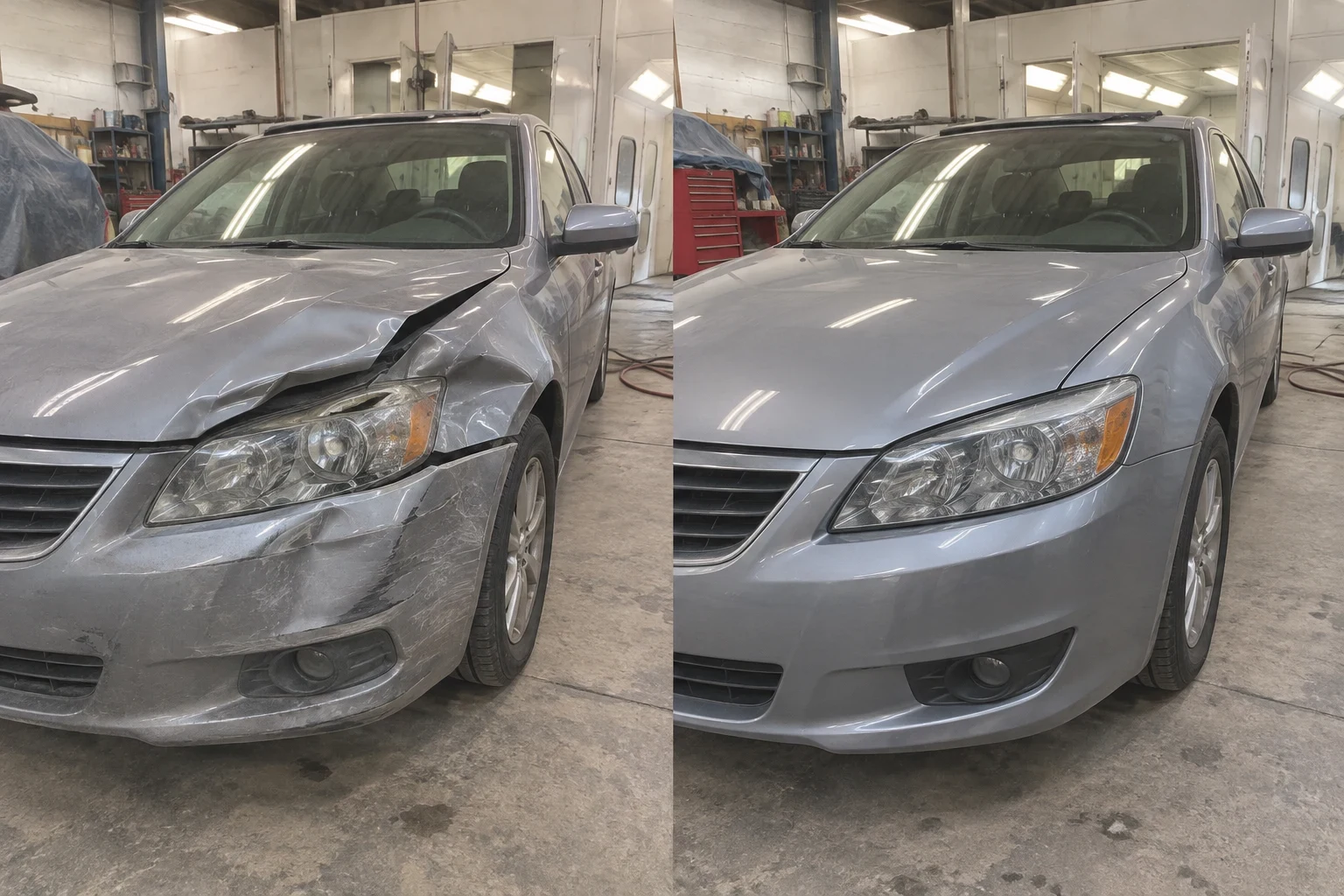
Find out what your paint really needs
Tell us what you are seeing and we will explain whether it is a polish, a spot repair or a refinish. Then bring the car by so we can look and give you the estimate.