ServicesInsurance Claims
Insurance Claim Repairs at Our Auto Collision Shop in Orange Cove
We repair your car under your insurance claim and deal with the adjuster on the estimate, the parts and any supplements. You get a plain explanation of what the repair needs and what happens next, before work starts.
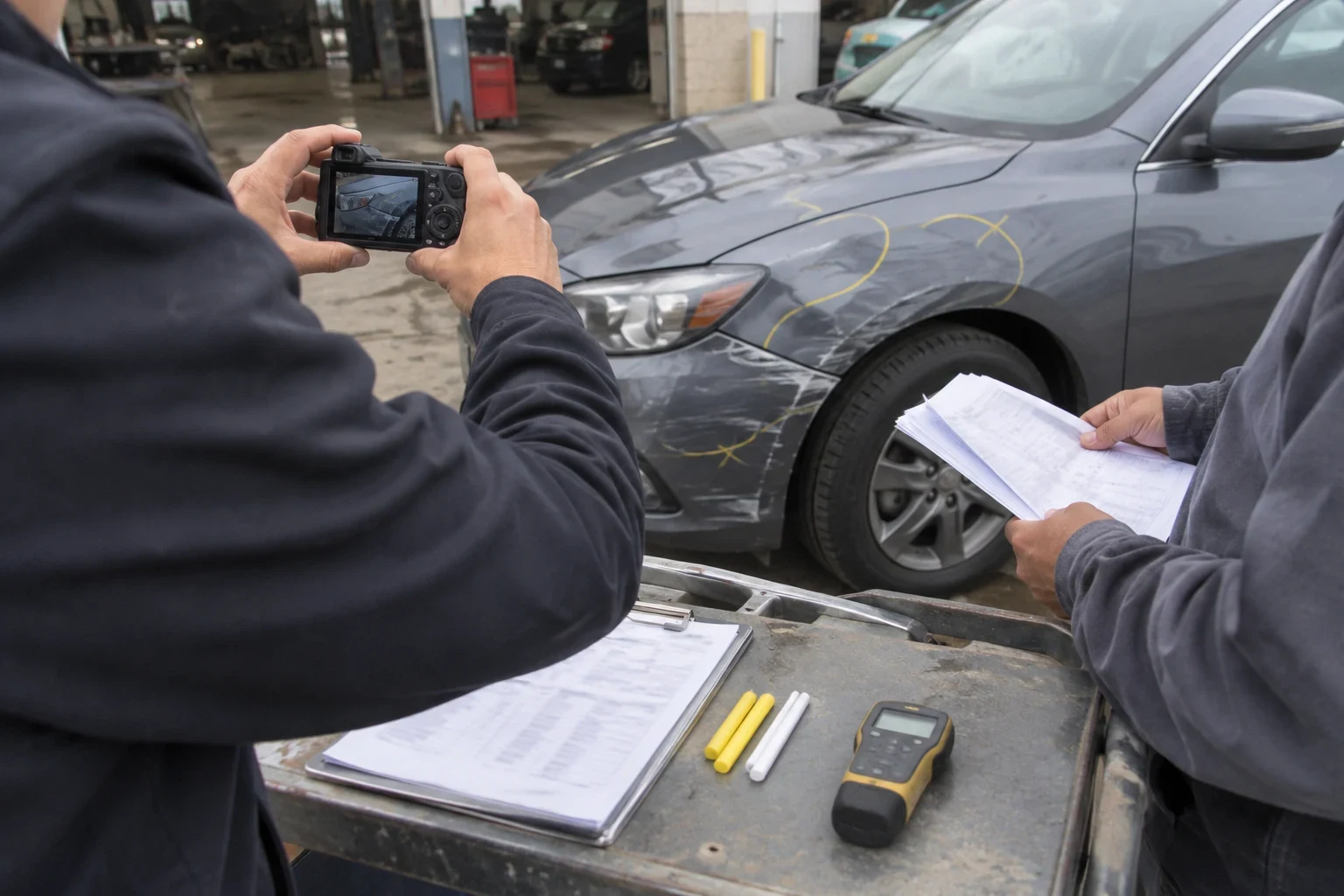
What we handle on an insurance claim
A collision claim involves you, your insurer and the shop that fixes your car. Our part is to document the damage accurately, write an estimate that reflects the real repair, and settle the differences with the adjuster so you are not caught in the middle.
In California, your insurer can recommend a shop but cannot require you to use one. You can bring your vehicle to us whether or not we appear on your insurer's list. We are I-CAR Platinum certified, so the repair methods written into the estimate follow current training for the steel, aluminum and sensors found in late-model vehicles.
We do not act as your adjuster, and we will not tell you what your policy pays. We will tell you what the car needs and why.
What the claim work includes
Photos and teardown
We photograph the damage as the car arrives, then remove the bumper cover or panels where needed to see what sits behind them. Cracked brackets, crushed absorbers and bent mounts are common, and finding them early keeps the claim from stalling halfway through.
A line-item estimate
Parts, each labor operation and every paint step get their own line. You and your adjuster work from one document, so it is clear what was approved and what was not.
Supplements with evidence
When teardown shows more damage than the first estimate covered, we send the insurer a supplement with photos. That added work waits until it is approved.
Straight talk on parts
Policies differ on new factory parts, aftermarket parts and used parts. We tell you which ones the estimate specifies and how that affects fit and finish, so you can raise it with your insurer if you disagree.
Paint matched to the car
Repaired panels are refinished and blended into the panels beside them, the same careful process we use for paint and refinishing work.
Signs it is time to bring us into your claim
The first estimate looks thin
Desk or photo estimates often miss what sits behind the outer panel. If the number seems low for the damage you can see, we can inspect the car and explain the gap.
You are unsure whether to file
When damage sits close to your deductible, it helps to know what the repair actually involves first. We give you the facts, and the filing decision stays with you.
Your insurer named another shop
A recommendation is not a requirement. You can choose where your vehicle is repaired.
The other driver was at fault
Third-party claims run through someone else's insurer, which can mean a separate adjuster and different rules on rental and parts. We work with that adjuster the same way we would with yours.
Something feels off after a minor hit
Uneven panel gaps, a door that closes differently or a new warning light can point to structural or sensor damage. Those findings may call for frame straightening, and they belong on the claim from the start.
How an insurance repair moves through our shop
- 1
The phone call
If you have your claim number and the name of your insurer, keep them handy when you ring. We walk you through how the repair will run and book a time for us to see the car.
- 2
Photos and a written estimate
We photograph the damage, check what is hidden where we can, and write the line-item estimate. The adjuster reviews it, sometimes in person and sometimes from our photos.
- 3
Sign-off and parts on order
With the adjuster's sign-off in hand, parts go on order and your car gets a place in the repair schedule. You hear from us which items are cleared and which the insurer is still reviewing.
- 4
Repair and supplements
Structural work comes first, then body work, then paint. If we find more damage, we pause that portion, send a supplement and keep you updated.
- 5
Final check and pickup
We inspect panel fit, paint match and lighting before you collect the car. You typically pay your deductible to us, and the insurer pays the approved balance.
What decides the cost of an insurance repair
When a claim is covered, you normally pay the deductible and the insurer pays the approved repair amount. The total still matters. It can decide whether the car is repaired or declared a total loss, and it shapes how long the claim stays open.
- Hidden damage
- Brackets, absorbers and mounts behind a bumper or fender can add more to a repair than the visible panel. Teardown is where this shows up.
- The parts your coverage names
- A new part from the carmaker, an aftermarket copy and a salvaged part each carry a different cost. The wording in your policy generally sets which of these the insurer agrees to cover.
- Paint and blending
- Matching a three-stage pearl or a metallic finish takes more material and labor than a solid color, and blending into adjacent panels adds time.
- Sensors and structure
- Cameras and radar units in bumpers and mirrors may need checks after the repair, and any structural measuring or straightening adds labor.
- Whose insurance pays
- If the other driver is at fault, their liability coverage may pay and your deductible may not apply. Under your own collision coverage, it usually does.
Insurance claim questions we hear most
Something not covered here? (559) 576-5307
Can my insurer make me take my car to a particular shop?
It cannot. California rules let an insurer suggest a shop, but the choice of where your car is repaired belongs to you. We work with your insurer whether or not we are on its list.
Is it worth going through insurance, or should I just cover it out of pocket?
Your deductible, the terms of your policy and the true scope of the repair all weigh on that choice. We can show you what the repair involves, which gives you a real figure to set against your deductible. Whether to open a claim is up to you, and your insurer is the right source for questions about your premium.
What happens if you find more damage once the repair starts?
We stop work on that area, photograph what we found and send a supplement to the adjuster. Once it is approved, the repair continues. We let you know when this happens and how it affects timing.
Will the insurance pay you directly?
Usually, yes. The insurer pays the approved repair amount, sometimes in a check made out to both you and the shop, and you pay your deductible when you collect the car. We explain how your insurer handles payment before work begins.
Can I keep driving my car while the claim is open?
Sometimes. If lights work, nothing is rubbing a tire, no fluids are leaking and no warning lights are on, driving to the inspection is often fine. If any of those are off, ask us on the phone before you drive it.
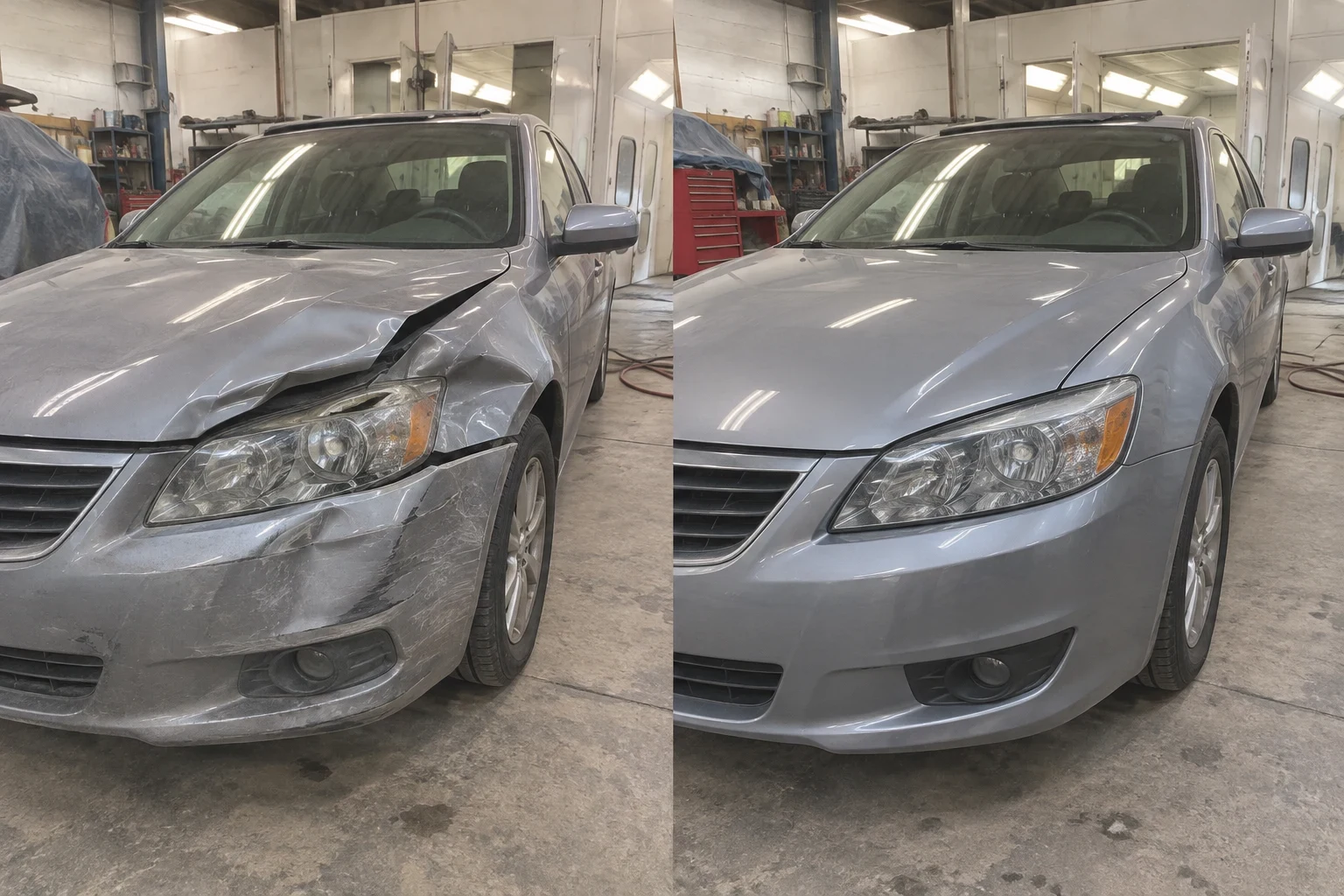
Start your claim repair with one phone call
Tell us what happened and where your claim stands, and we will explain the next step. We work with drivers from Orange Cove, Orosi, Reedley and Dinuba.