ServicesDent Repair
Dent Repair in Orange Cove
Most dents fall into one of two repairs: paintless work that keeps your factory finish, or body and paint work when the metal or paint is damaged. We look closely, tell you which one your car needs and why, and explain what the repair involves before we start.
Paint condition and metal shape decide the repair
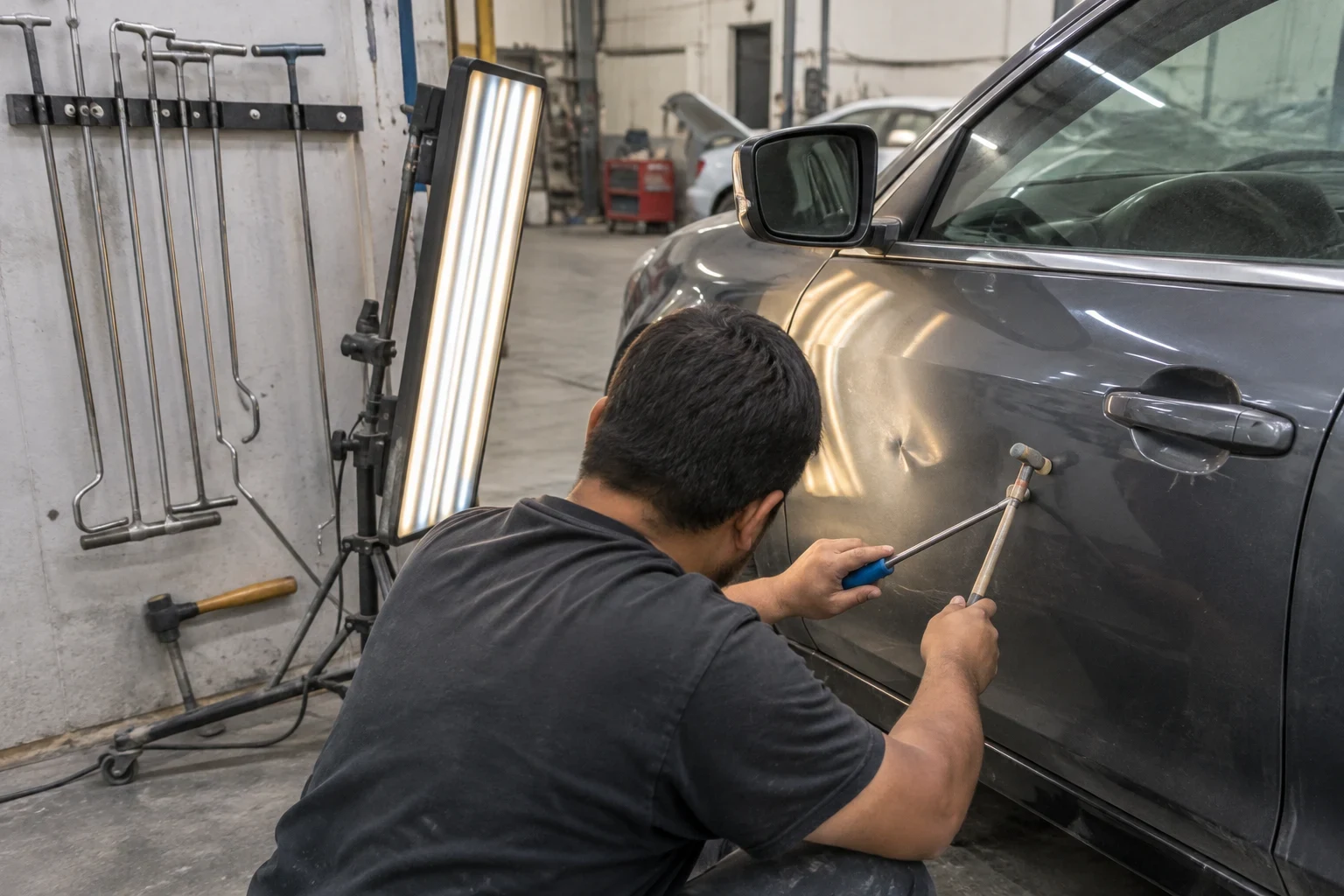
A dent is steel or aluminum pushed out of its original shape. When the paint has no breaks and we can get a tool behind the panel, paintless dent repair can often work the metal back into place. Your original paint stays on the car, with no sanding, filler or spray.
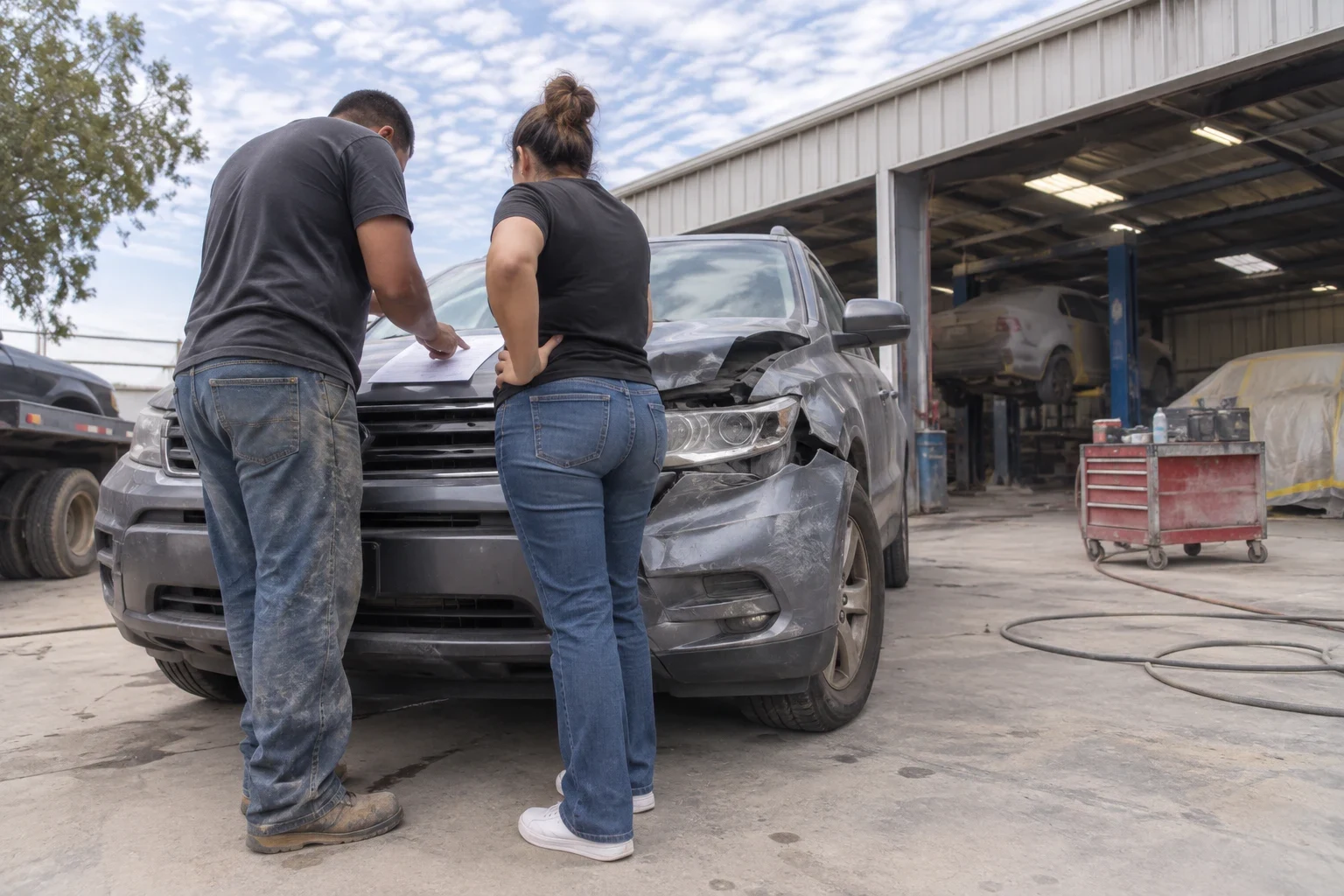
Paintless work stops being a good choice when the paint has split, the damage runs across a crisp body line, or the metal has stretched past the point of springing back. Those panels get pulled and shaped, finished with a thin skim of filler where needed, then primed and refinished to match. We say plainly which repair fits, and we will not sell you the bigger job when the smaller one does the work.
We are an I-CAR Platinum certified shop, and that training matters most on dents that need a careful hand, like aluminum hoods and panels close to parking sensors.
What our dent repair covers
- 01
Inspection under a reflection board
A reflection board shows the highs and lows in a panel that the eye alone misses. We also look closely at the paint around the dent for fine cracks, since those rule out paintless work.
- 02
Paintless dent repair
Dings, hail marks and soft dents are worked out from behind with rods, or drawn out from the front using glue tabs. Your factory finish is left untouched.
- 03
Getting behind the panel
Some dents can only be reached after a tail light, an inner door trim panel or the edge of a headliner comes off. We take those parts out with care, put them back, and make sure each clip is fully seated.
- 04
Conventional body and paint repair
Panels that are creased, stretched or cracked are pulled, shaped and refinished. We mix the color against your vehicle's own paint and fade the new coat gradually across the neighboring panels, so the eye does not catch where the repair ends. Our Paint and Refinishing page explains how color matching works.
- 05
Aluminum panels
Aluminum is less forgiving than steel and does not tolerate being reworked. We take a slower, gentler approach with it and tell you honestly when replacing the panel makes more sense than repairing it.
Questions about Dent Repair?
Call(559) 576-5307Signs a dent is worth fixing now
Cracked or chipped paint at the dent
Once the paint is broken, bare metal is exposed. Steel will start to rust, and the repair grows from a ding into a refinish job.
A crease along a body line
Sharp folds on a door or quarter panel stretch the metal. These rarely come out on their own and often need conventional repair.
Hail damage across the roof or hood
Dozens of small dents add up, and they can lower your car's trade-in value. Many hail jobs suit paintless repair if the paint held up.
A door or trunk that no longer closes cleanly
A dent near an edge or hinge can shift how a panel lines up. If gaps look uneven, there may be damage behind the panel that needs a look, and our Collision Repair page covers that work.
A dent near a sensor or camera
Bumper and door dents can sit close to parking or blind-spot sensors. We check that the sensors still read correctly after the repair.
How a dent repair runs
- 1
Start with a phone call
Describe where the dent sits, roughly how large it is and whether the paint has broken. We will give you our early read and pick a day that suits you to drop the car off.
- 2
A look under the light, then the estimate
Once your car is here, we study the dent under a reflection board, check the paint and work out how to reach the back. The written estimate names the method we recommend and explains why.
- 3
The repair
Paintless work happens in small, careful stages, with the reflection checked after each push. Body and paint repairs go through shaping, priming, painting and curing, so they take longer.
- 4
Final check and handover
Before pickup we look over the panel from several angles, then walk around it with you. Any trim, lights or sensors we removed are tested before your car goes home.
What sets the price of a dent repair
Dents that look alike can land at quite different prices. What matters is which method the damage allows and how much labor goes into reaching and finishing it. Each of these shows up on the estimate, so you can see where the number comes from.
- Paintless or refinish
- Paintless work usually comes in lower because no filler, primer or paint is involved. Once a panel needs refinishing, materials and paint booth time join the bill.
- Size, depth and location
- A deep dent, or one sitting on a body line or near a panel edge, takes longer to bring back. A shallow dent in the flat center of a panel is the simplest case.
- Getting behind the panel
- When lights, trim or interior panels have to come off to reach the dent, that removal and refitting time is included in the estimate.
- Panel material
- Aluminum asks for more time and a gentler approach than steel. With some aluminum dents a new panel is the cheaper answer, and we lay out both choices for you.
- How many dents
- Hail and parking lot damage are priced on the count of dents and where each one sits. We count them one by one instead of estimating by eye.
Dent repair questions
Can my dent be fixed without repainting?
Paintless repair is an option when the paint is still whole and there is a way to get a tool behind the metal. Small and medium dents on flat or softly curved panels respond best. Sharp creases, stretched metal and broken paint usually call for conventional body and paint work. Once we have seen the dent, we will tell you which group it falls into.
Will the repair show afterward?
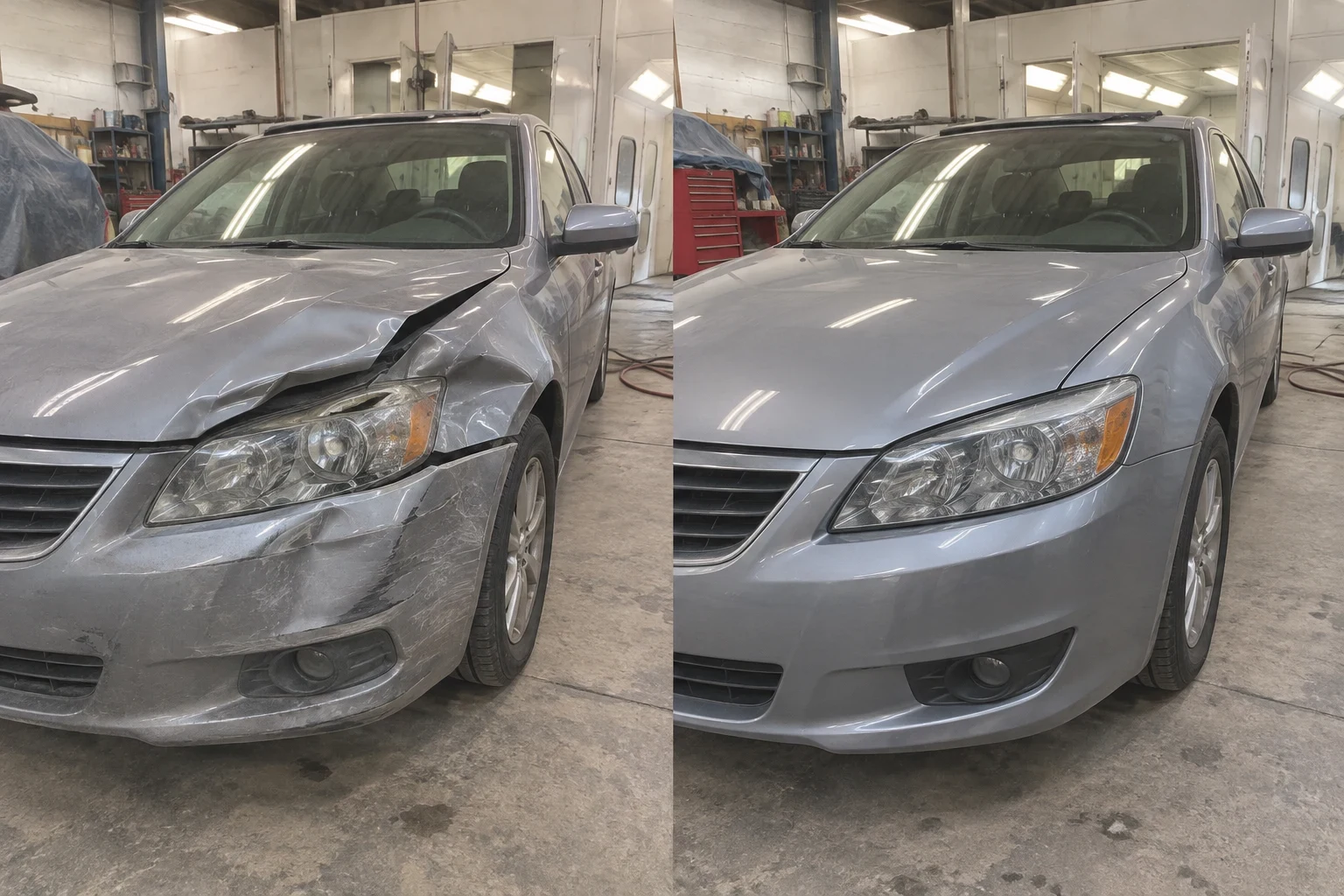
A well done paintless repair leaves the panel straight under ordinary light, and the factory paint is still there. On panels we refinish, we match the color and blend it into the panels beside it so the edge is hard to spot. Some very deep or stretched dents will not come back perfectly with paintless methods, and we say so before we begin.
Should I put a small dent through insurance?
A single small dent often costs less to fix than your deductible, so paying for it yourself is usually the better move. Hail across the whole car is a different situation and often justifies a claim. We are glad to walk you through how a claim works, and our Insurance Claims page lays out the steps.
How long will my car be at the shop?
One dent fixed with paintless methods is often a short visit. Anything that needs paint takes longer because of priming, spraying and curing. You get an expected timeline along with the price.
Can a dent hide other damage?
It can, particularly around bumpers, doors and wheel wells. A bent bracket or a sensor knocked out of position can sit right behind a dent. We look behind the panel before giving a price, so nothing unexpected turns up halfway through.
Get a straight read on your dent
Let us know which panel took the hit and whether the paint is chipped or still whole. We will give you the likely repair and find a time to see your car in person.