ServicesCollision Repair
Collision Repair in Orange Cove
A collision rarely stops at the panel you can see. We open up your car, find what the impact reached behind the bumper and under the trim, and give you a clear account of what needs repair, what can wait and what it costs to put right.
What collision repair covers
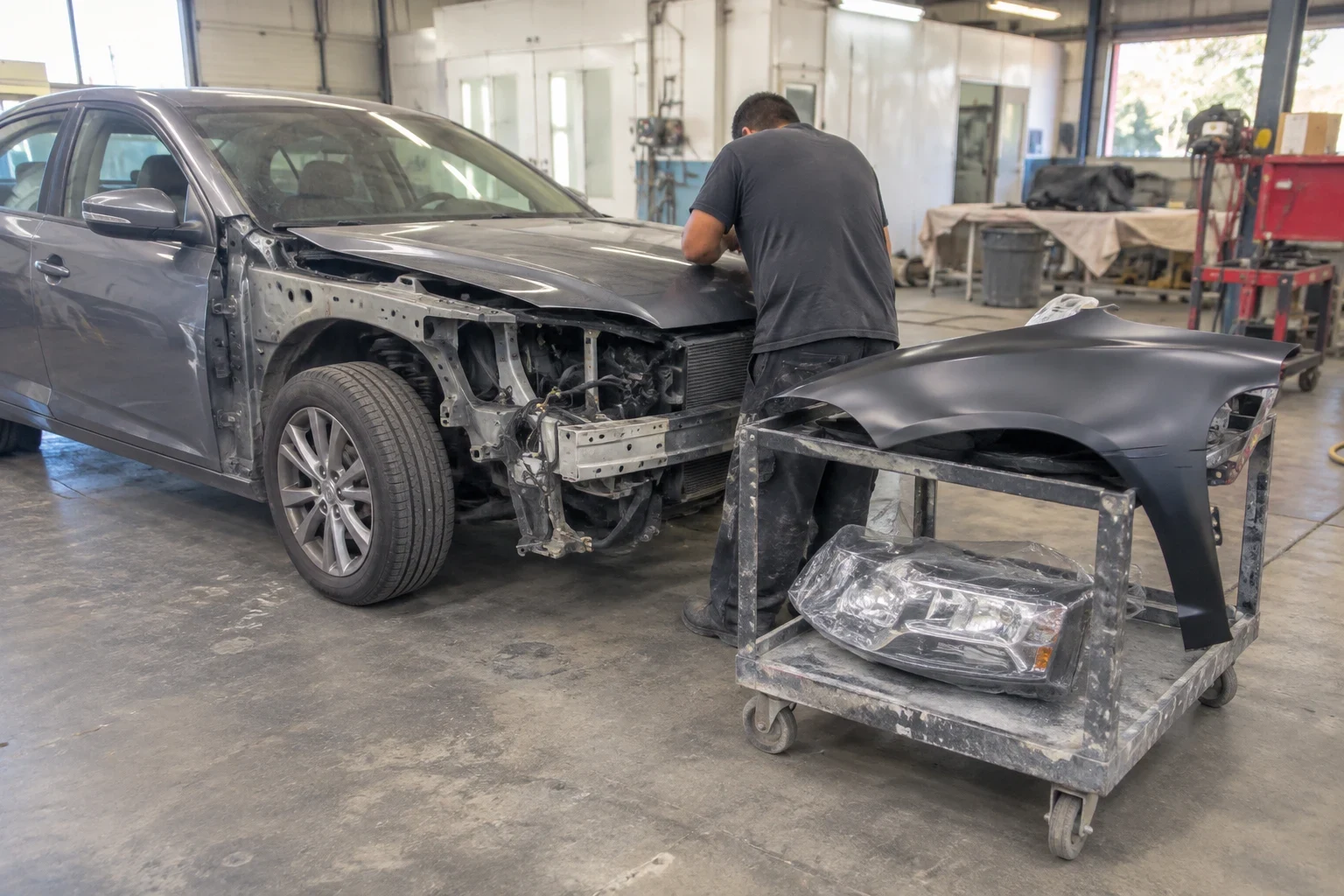
Collision repair is the work of returning a damaged vehicle to its original shape, strength and finish. That can mean a crumpled fender and a cracked headlight, or it can mean a bent radiator support, a pushed-back wheel and airbag sensors that need replacing. The visible damage is only where the force entered.
Our job is to follow that force through the car and fix everything it touched. We are I-CAR Platinum certified, which means our technicians train on current repair methods for modern steel, aluminum and plastic construction. In practice, you get a repair that holds up in the next impact, not just one that looks right in the driveway.
If the damage is limited to a single panel or bumper, our Dent Repair and Bumper Repair pages may answer your question faster. When the car took a real hit, this is the right place to start.
What the work includes
- 01
Teardown inspection
We remove the damaged bumper cover, lights and trim to see the brackets, absorbers and reinforcements behind them. Most hidden damage shows up at this stage, and we photograph what we find.
- 02
Structural measurement
We measure the body against the manufacturer's dimensions. If the unibody or frame is out of spec, we tell you and the work moves into Frame Straightening before any cosmetic repair.
- 03
Panel repair or replacement
Some panels repair cleanly; others are stretched, creased at a body line or made of high-strength steel that should not be heated. We explain which way we are going on each one and why.
- 04
Mechanical and safety parts
Impacts often reach the cooling system, suspension, airbags and seat belt pretensioners. We check these and list anything that needs replacing on the estimate.
- 05
Refinish and color match
Repaired panels are primed, sealed and painted to match the rest of the car, with blending into neighboring panels where the color needs it. Our Paint and Refinishing page covers that step in more detail.
- 06
Final check
Before you pick up your car we check panel gaps, door and hood alignment, lights, warning lamps and a road test for noises or pulling.
Questions about Collision Repair?
Call(559) 576-5307Signs the damage goes deeper than it looks
Uneven panel gaps
Look at the seams around the hood and the doors. If a gap is noticeably wider at one end than the other, a bracket or support behind the panel has likely shifted.
A door that closes differently
Doors that stick, sag or need an extra push usually mean the opening has moved slightly in the impact.
Warning lights after the accident
An airbag, ABS or driver-assist light points to a damaged sensor or wiring that needs attention before the car is safe to rely on.
Pulling or uneven tire wear
A wheel struck in the collision can bend a control arm or knock the alignment out. Left alone, it wears tires fast and changes how the car handles.
Fluid under the front
Green, pink or orange drips after a front-end hit often mean a cracked radiator or condenser sitting just behind the bumper.
How the repair runs
- 1
The first call
You describe what happened and we arrange a time for you to bring your car to our shop. If it is not safe to drive, tell us and we will talk through getting it here.
- 2
Inspection and estimate
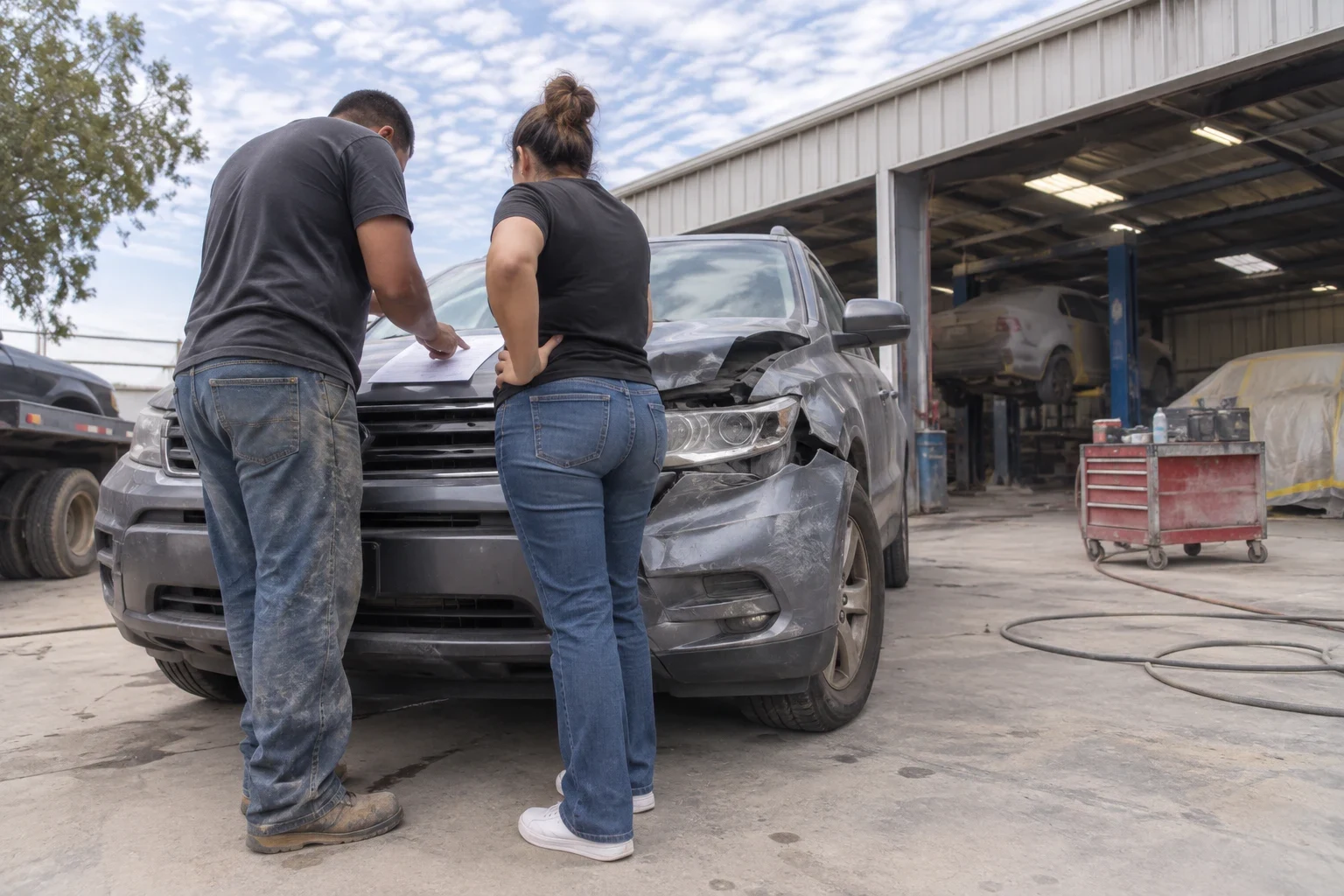
We look the car over, then write an estimate line by line: parts, labor, paint and materials. If you are going through insurance, we share it with the adjuster.
- 3
Teardown and supplement
Once the car is apart, hidden damage often appears. We document it with photos, update the estimate and talk to you before doing any added work.
- 4
Repair and refinish
Structure first, then panels, then paint. Parts are ordered as early as possible so your car is not sitting idle waiting on one bracket.
- 5
Pickup
We walk you around the car, show you what was replaced and answer any question before you drive away.
Collision repair cost drivers
The price of a collision repair depends on what the impact reached, and much of that sits behind panels we have to remove first. Our estimate lists each part, each labor operation and the paint materials on its own line, so you can see where the money goes. The factors below account for most of the difference between one repair and the next.
- Depth of the impact
- A hit that stops at the bumper absorber stays a fairly contained repair. When the force carries on into the radiator support, headlamps and fender, the parts list and labor hours grow quickly.
- Body materials and paint
- Aluminum panels and high-strength steel need specific tools and slower methods than older mild-steel bodies. Multi-stage pearl and tri-coat colors also take more time and material to match.
- Cameras, radar and sensors
- Many bumpers and grilles now carry parking sensors, radar units or cameras. Those parts are costly to replace, and several need recalibration once the repair is done.
- Which parts are used
- Factory parts, aftermarket parts and good used parts differ in price and in how well they fit. Your policy may decide which ones go on the car, and we walk you through the tradeoffs.
- Frame or unibody work
- Straightening on the measuring system adds hours, and in many estimates it is the largest single swing in the total.
Collision repair questions
Why did my estimate go up after you started?
Some damage stays hidden until the bumper cover and trim come off. When we find more, we photograph it, add it to the estimate and reach you or your insurer before that work begins. Any change to the bill is something you have already seen and approved.
Can I pick my own shop, or must I use the one my insurer suggests?
California law lets you choose where your car is repaired. Your insurer can recommend shops, but the decision is yours. Our Insurance Claims page explains how we work with adjusters during the repair.
Is my car safe to drive to the shop?
If the lights work, nothing is dragging or leaking and no warning lamps are on, a short drive is usually fine. A bent wheel, deployed airbags or a hard pull to one side mean the car should come in on a tow truck instead.
Can my car be fixed or is it a total loss?
Your insurer decides that by weighing the repair cost against the car's value. We give you an honest repair estimate, and if the numbers look close to that line, we tell you early so the outcome does not come as a surprise.
How long will collision repair take?
It depends on how far the damage goes and how quickly parts can be sourced. After the car is apart and we know exactly which parts it needs, we can give you a realistic timeline, and we keep you posted if a delivery or a hidden problem changes it.
Get a clear picture of the damage
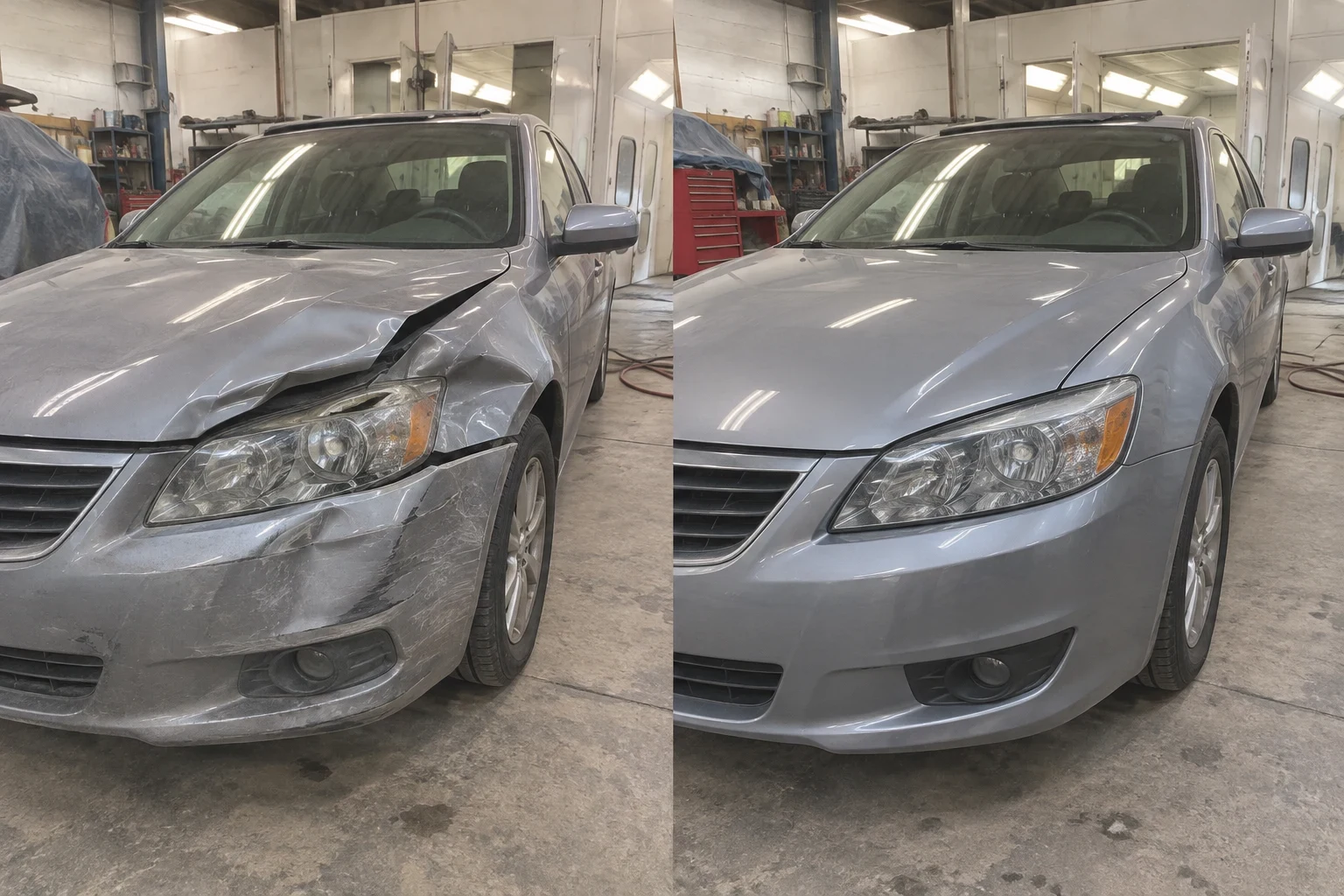
Drivers from Orange Cove, Orosi and Reedley bring their cars to our shop after an accident. Give us a quick account of the collision, and we will find a time to inspect your car and lay out the repair options.