ServicesFrame Straightening
Frame Straightening in Orange Cove
After a collision, your car's structure can shift while the panels still look fine. Wheels, doors and sensors end up slightly out of place. We measure your vehicle against factory dimensions, pull it back into specification and show you the numbers before and after the repair.
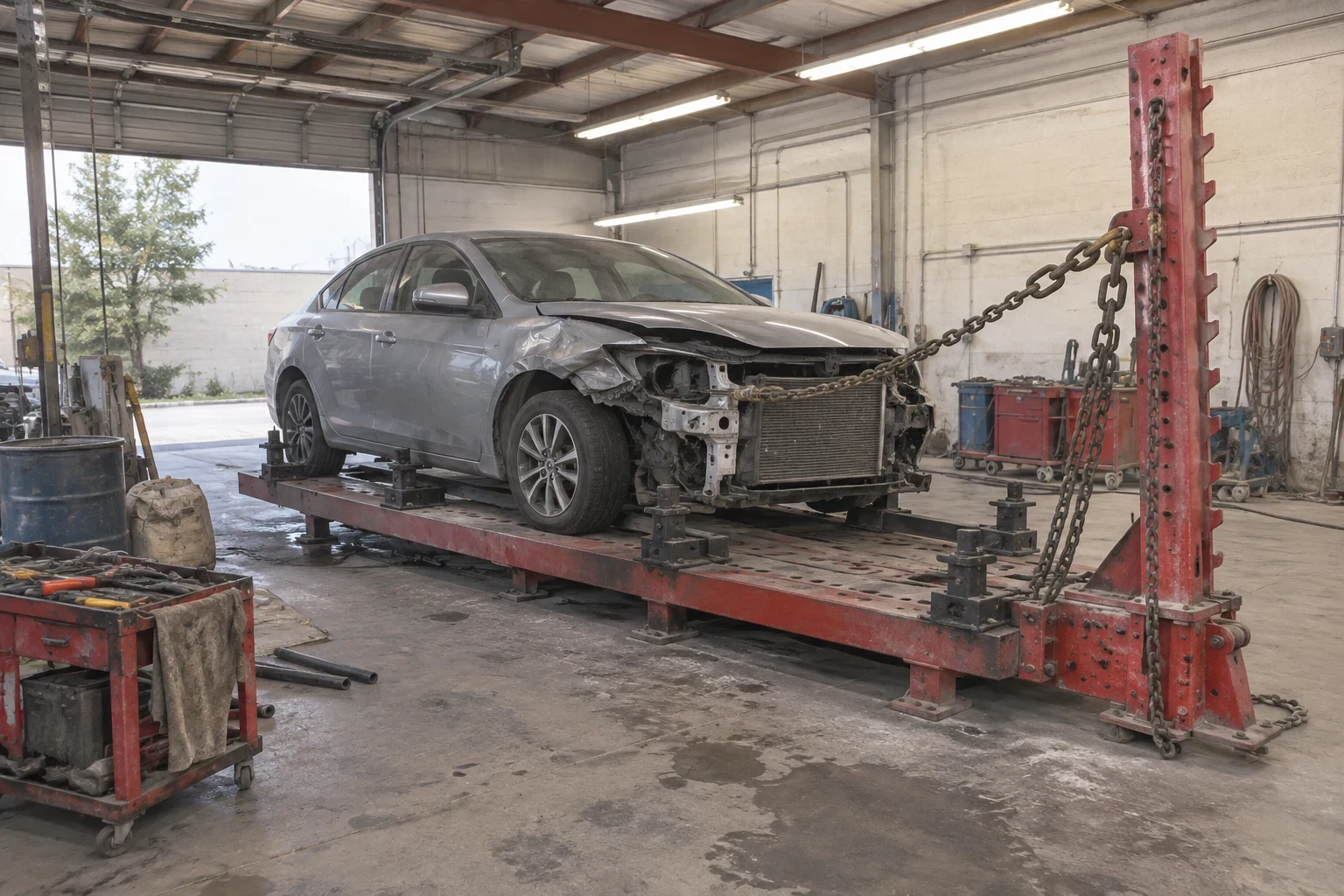
When a shifted structure needs pulling back into place
Nearly every modern car uses a unibody design, where the floor pan, rails and pillars share the job a separate frame once did. A hard hit can push a rail back a fraction of an inch or lean a strut tower inward. A shift that small is enough to throw off wheel alignment and door gaps, and to change the way crash energy moves through the car in a later impact.
The repair uses anchoring clamps, staged hydraulic pulls and careful measurement to return those structural points to the positions the manufacturer set. It suits damage where the measurements are off but the metal is not torn or overstretched. When a section is too far gone, replacing it is the honest answer, and we tell you which case applies to your car.
Our shop is I-CAR Platinum certified. That training shapes how we handle modern high-strength steel, which can lose strength if it is heated or pulled the wrong way.
What the work includes
- Full structural measurement
- Before anything is pulled, we measure control points under the car and in the engine bay and compare them with the manufacturer's published dimensions. You get a record of where each point sits.
- Anchoring and staged pulls
- Your vehicle is clamped at its pinch welds so the body cannot move as a whole. We apply pulls in small stages and recheck the measurements between each one. We never force it in a single move.
- Section replacement when needed
- If a rail or apron is kinked past the point where pulling is safe, we replace that section by following the manufacturer's repair procedure, including its weld locations and methods.
- Corrosion protection restored
- Pulling and welding disturb the factory coatings. We restore seam sealer and corrosion protection inside the repaired areas so moisture cannot settle into bare metal.
- Fit and alignment checks
- Once the structure is right, we check door, hood and trunk gaps and the suspension mounting points. We also confirm the wheel alignment and flag any driver-assist sensors that need calibration after structural work.
Signs your car's structure has shifted
Uneven panel gaps
A gap that is wide at the top of a door and tight at the bottom, or a hood that sits higher on one side, often points to a shifted structure rather than a bent panel.
Pulling or uneven tire wear
If your car drifts to one side or chews the edge of one tire after an accident, a suspension mount may have moved. Even a low-speed slide off a rural road into a ditch can do it.
Doors or trunk that fight you
Doors that need a slam to latch, or a trunk lid that no longer lines up with its striker, are common signs that the openings have changed shape.
Wrinkles underneath
Creases in the rails, floor pan or inner fenders are visible proof that the structure absorbed the hit.
New warning lights
Lane-keeping or collision-warning faults after an impact can mean the sensors are mounted on structure that is no longer where it should be.
What moves the cost of frame work
Two things set most of the cost: how far the structure shifted and what metal it is built from. Neither is clear until your car is on the measuring system. Once we inspect it, you get a written estimate. If removing panels reveals hidden damage, we show it to you, explain it and revise the estimate before any added work begins.
How far out of spec
One rail pushed back slightly takes far less time than several points shifted across the car.
Steel or aluminum
High-strength steel and aluminum have strict limits on heat and pulling, and some parts must be replaced rather than reshaped.
Pull or replace
Section replacement adds parts, welding and corrosion work compared with a pull alone.
Related repairs
Suspension parts, outer panels, refinishing and sensor calibration are often tied to structural damage and appear as separate lines on the estimate.
How a structural repair moves through our shop
- 1
Start with a phone conversation
Describe the accident and anything that feels different since. We arrange a time for you to bring your vehicle in for an inspection.
- 2
Teardown and measurement
We remove the damaged outer parts so we can see the structure and measure it. We photograph what we find.
- 3
Written estimate and options
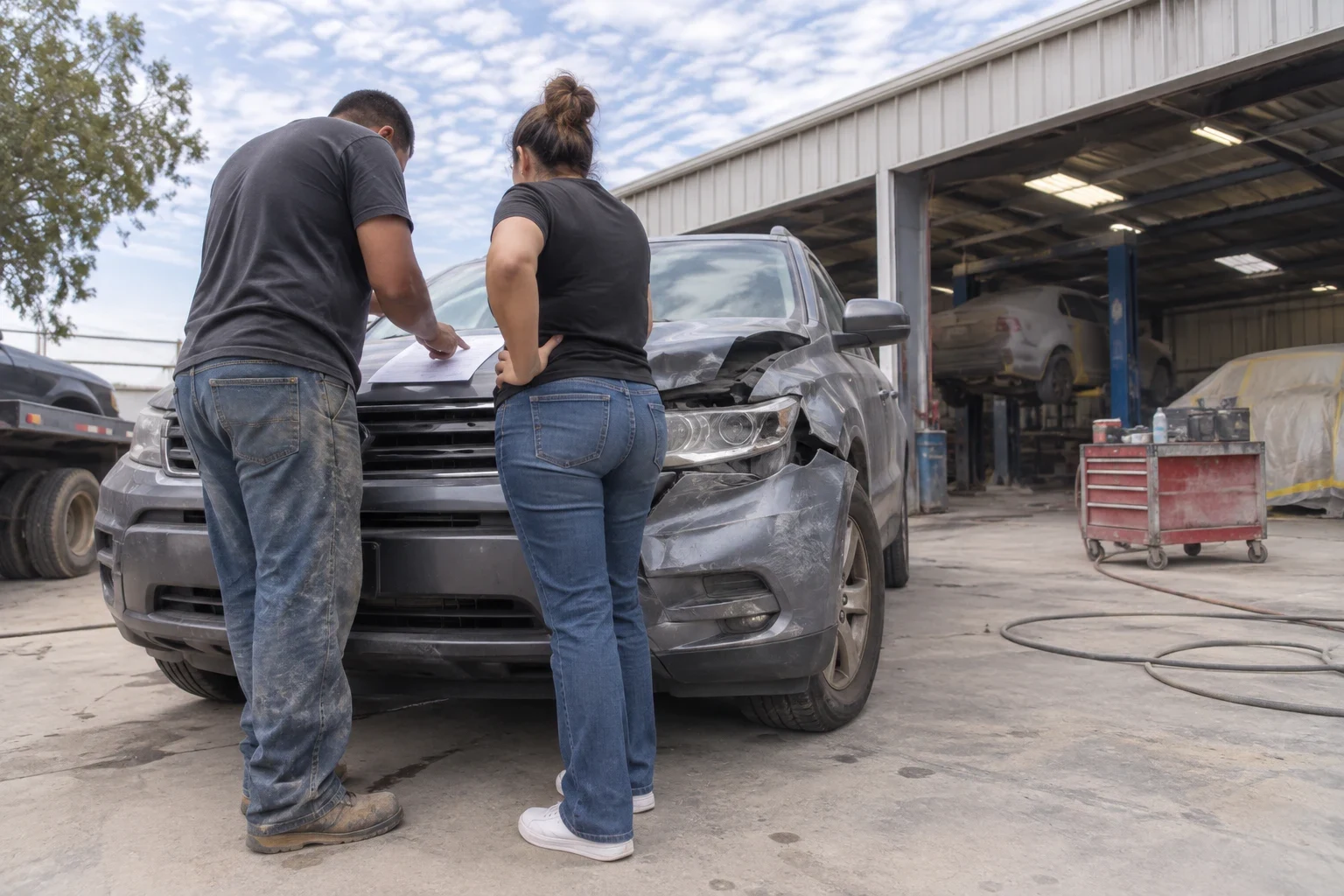
You get a line-item estimate that shows which points are out, whether they can be pulled back or need replacing, and what related repairs follow. Nothing proceeds until you agree.
- 4
Pull and rebuild
We complete the pulls and any section work, restore corrosion protection and then move on to panels and paint and refinishing.
- 5
Final checks and handover
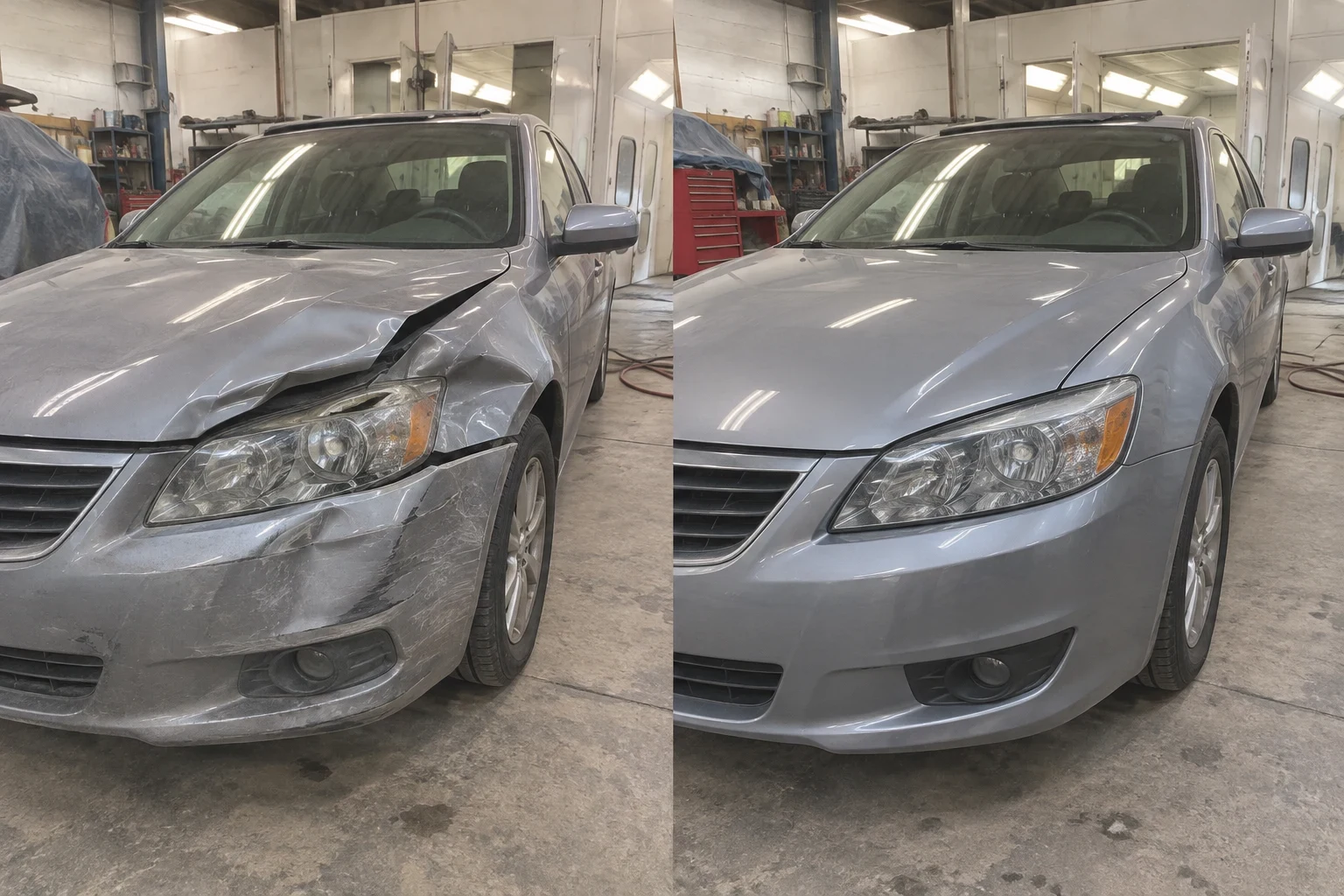
We re-measure, confirm the gaps and alignment, and go over the before and after readings with you when you pick up your vehicle.
Questions about frame repair
Will my car be as strong after frame straightening?
If the metal stays within the limits the manufacturer allows, a properly repaired structure goes back to its factory dimensions. Any part stretched or kinked beyond those limits gets replaced, not pulled. You see the final measurements yourself.
Does frame damage mean my car is totaled?
Not on its own. Your insurer decides that by comparing the repair estimate with the value of the vehicle. Many cars with structural damage are repaired and go back on the road.
Can I keep driving with a bent frame?
We advise against it until the car has been inspected. A shifted structure can change steering and braking stability, and it changes how the car protects you in another collision. If anything feels unsafe, have it towed to our shop.
What is a realistic turnaround for frame work?
It comes down to the number of points that are out, whether any section needs replacing and when parts arrive. Once the measurements are done, we give you a timeline we can stand behind. If something changes along the way, we let you know.
Will you work with my insurance company?
Yes. We record the structural damage with measurements and photos your adjuster can review, and we walk you through each stage of the insurance claim. The Insurance Claims page explains how the process usually runs.
Find out where your car's structure stands
Describe the accident over the phone and we will explain what an inspection involves and what we need to see. We work on vehicles from Orange Cove and nearby towns such as Reedley, Orosi and Dinuba.